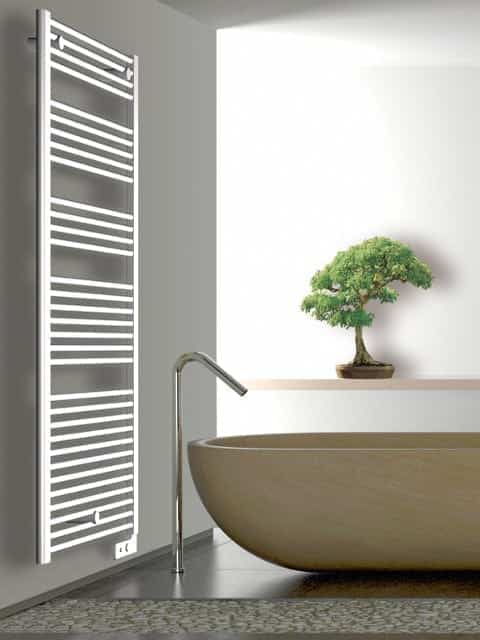
Electric bathroom radiator or hot water radiator: which solution is better?
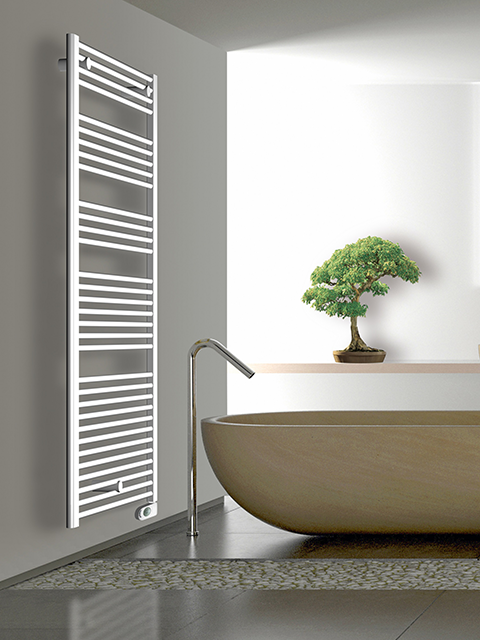
Two systems, one decision
Anyone planning or renovating a bathroom will sooner or later be faced with the question: electric bathroom radiators or hot water radiators? Both systems are justified, and neither is fundamentally better than the other. Which is best depends on the installation situation, the existing heating system, the frequency of use of the bathroom and the desired level of comfort.
The hot water radiator: the proven standard solution
A bathroom radiator that is connected to the central heating system works together with the rest of the house in heating mode. It heats the bathroom when the heating is running and cools it down when it is switched off. This is efficient in winter, when the bathroom needs to be brought up to temperature regularly anyway. With well-insulated buildings and modern heating systems, this solution is usually the most economical.
Caldo offers a wide range of hot water bathroom radiators, from classic models such as the Evelino to designer models such as the Trentino and Asperto. All models are available in different sizes, finishes and connection options.
The electric bathroom radiator: flexible and independent
Electric bathroom radiators do not require a connection to the central heating system. They are connected to a socket and heat independently of the rest of the heating system. This makes them the first choice in bathrooms where there is no heating connection, in retrofitted bathrooms, in guest bathrooms or in rooms that only rarely need to be heated.
The Alexandro EB and Trentino EB from Caldo are fully electrically operated, pre-filled with thermal fluid and equipped with a digital heating cartridge. They comply with the Ecodesign Directive ErP and Regulation (EU) 2015/1188 and have six operating modes: comfort, chrono program, booster, window detection, frost protection and night setback.
Combination as the best solution: hot water and electricity together
In many bathrooms, the best solution is to combine both systems. A radiator powered by hot water provides the basic heating, while an electric auxiliary radiator supplies heat quickly when required without having to start up the entire heating system. This combination is particularly useful for low-temperature heating systems and heat pumps, as the central heating system cannot be brought up to high temperatures at short notice.
The Evelino EB is specifically designed for this use as a supplement to low-temperature heating systems. It has the same external dimensions as the hot water-operated Evelino and can use existing fixing points, which simplifies installation.
Frequency of use as a decision criterion
For bathrooms that are used daily and by several people, the hot water connection is more worthwhile in the long term. For guest bathrooms that are only used occasionally, electric operation is more economical because no heating energy needs to be permanently provided for rooms that are rarely used. Operation can be precisely controlled with the weekly program of the electric models.
Conclusion: Electric bathroom radiator or hot water – which solution is better?
The answer depends on your specific situation. Hot water operation is the economical standard solution for bathrooms used on a daily basis with an existing heating connection. Electric operation offers maximum installation flexibility and is particularly suitable for guest bathrooms, rooms without a heating connection and as a supplement to underfloor heating or low-temperature systems. A combination of both is the smartest choice in many existing situations.
We will be happy to help you decide which system is best suited to your situation. Contact us now.