



Radiators and heat pumps: what really works in existing buildings
Heat pumps in old buildings: between expectation and reality
The heat pump is considered a central element of the heating transition. In new buildings designed for low system temperatures, they work efficiently and economically. In older buildings with existing radiators, the picture is more nuanced. Anyone thinking about retrofitting should know what works under what conditions and where the realistic limits lie.
Why the flow temperature is so crucial
The efficiency of a heat pump depends directly on the temperature difference between the heat source (ground, air or groundwater) and the heating system. The lower the required flow temperature, the more efficiently the heat pump works. As a rule of thumb, the efficiency decreases noticeably with every five degree increase in the flow temperature.
Classic radiators in old buildings are usually designed for flow temperatures of 70 to 90 degrees. Heat pumps work optimally at 35 to 45 degrees. This gap must be closed, either through larger heating surfaces, better insulation of the building or a combination of both.
When existing radiators are sufficient
In many existing buildings, the radiators were originally deliberately oversized. This means that they can still provide sufficient output at lower flow temperatures if the room is well insulated. Hydraulic balancing is essential here, as it ensures that all radiators have an even flow and that the system temperature can be lowered as much as possible.
Whether your existing radiators are suitable for heat pump operation can be determined with a heat load calculation in accordance with DIN EN 12831. This calculation shows how much heat a room requires at the coldest expected outside temperature and whether the existing heating surface can provide this with a low flow rate.
Where it makes sense to replace radiators
In rooms where the existing heating surface is not sufficient, a targeted replacement is recommended. Caldo offers models such as the Adriano, the Mirro or the Liscio for living rooms, which, thanks to their design and heating surface, perform well even with a moderate flow rate. The technical data can be found in the data sheets in the download area.
The bathroom as a special case in the heat pump portfolio
The bathroom has special requirements in heat pump operation. Bathrooms are heated to 24 degrees and above, the radiator also has to dry towels and provide short-term comfort heat. Low-temperature systems, which heat slowly and evenly, are often not designed for these requirements alone.
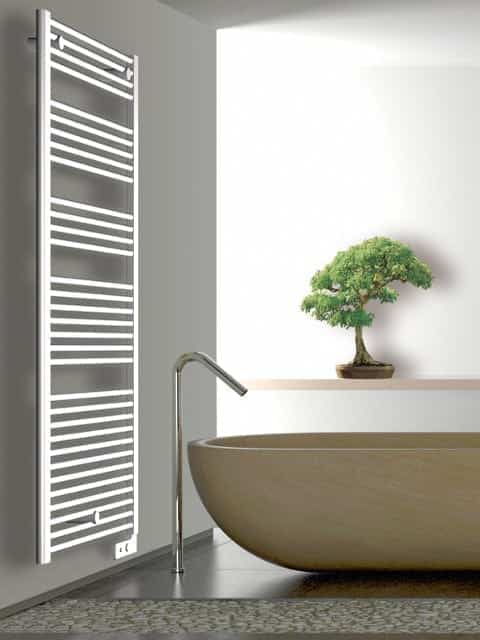
A sensible solution is the combination of a hot water-operated bathroom radiator and an electric auxiliary device. The Evelino EB from Caldo is expressly designed as an additional heat source for low-temperature heating systems that cannot be heated up at short notice. It supplies heat as required without the need to adjust the central heating system.
Reasonable expectations for the portfolio
A heat pump in an old building works well in many cases, but rarely without accompanying measures. Anyone planning realistically will not promise miracles or make any blanket promises. The building envelope, existing heating surface, hydraulic balancing and the particular situation in the bathroom must be considered together.
Conclusion: radiators and heat pumps in existing buildings
It is possible to use a heat pump in existing buildings, but it requires an honest analysis of the existing situation. Existing radiators can continue to be used in many rooms if the hydraulic balancing is correct. In the bathroom, an additional electrical solution is recommended to cover comfort requirements independently of the system flow. Caldo offers suitable products for both scenarios.
If you would like to know which solution is right for your portfolio, please contact us. Contact us now.

